
Loading...
Serving Mililani, HI and surrounding areas. (808) 556-0445
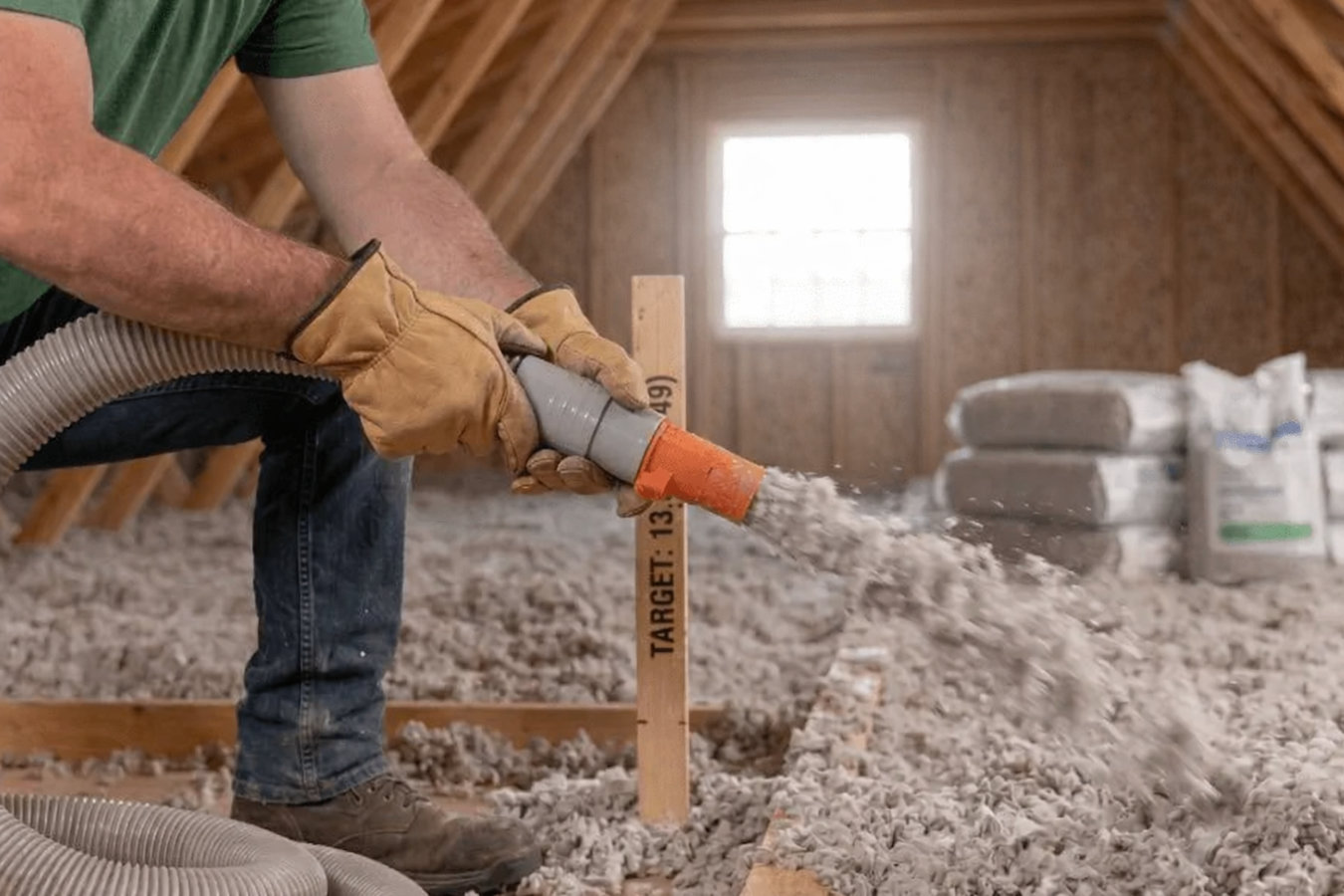
Gaps and thin spots in your attic let heat pour in all day. Blown-in insulation fills every corner and irregular space that batts cannot reach, so your home stays cooler and your AC works less.
Blown-in insulation in Mililani involves pumping loose fiberglass or cellulose material into your attic using a large hose, filling gaps and corners that rigid batts simply cannot reach - most single-story jobs are complete in one day. The result is a more consistent thermal barrier with fewer thin spots that let heat push through.
Mililani homes built in the 1970s and 1980s were insulated to standards that made sense at the time - but those standards are a fraction of what is recommended today. If your attic insulation has never been upgraded, heat is almost certainly finding easy paths into your living space every afternoon. Pairing blown-in insulation with air sealing services plugs those gaps before any material goes in, which is what separates a good job from one that barely moves the needle.
Hawaii Energy, the state efficiency program, offers rebates for qualifying insulation upgrades - your contractor should walk you through eligibility before any work begins. Learn more at hawaiienergy.com.
If your Hawaiian Electric bill creeps up year after year without new appliances or changed habits, your attic may be the culprit. Heat pouring through an under-insulated attic forces your AC to run longer. In Mililani, where electricity costs are among the highest in the country, this is one of the most expensive signs that insulation needs attention.
Rooms directly under the roof that feel uncomfortably warm in the afternoon - even with AC running - signal that your attic is not doing its job. Heat builds up in an uninsulated space and radiates down through the ceiling. This is especially common in Mililani homes from the 1970s and 1980s, where original insulation has had decades to settle and thin out.
Look into your attic with a flashlight. If you can clearly see the wooden framing across the attic floor, your insulation is too thin. Adequate insulation should cover those joists completely. If the wood is visible, you are losing a significant amount of cooling energy every day without knowing it.
Mililani's elevation and trade wind exposure mean attics can accumulate moisture during periods of heavy rain. If you have noticed a musty smell in upper rooms, water stains on ceilings, or condensation near light fixtures, moisture and poor insulation may be working together. Addressing both at the same time is far more effective than tackling one alone.
We handle blown-in insulation for attics, walls, and floors across Mililani and surrounding areas. Every job starts with air sealing - we plug gaps around pipes, fixtures, and framing before any insulation goes in, because skipping that step cuts the benefit significantly. For older homes that have never had a full upgrade, we often pair blown-in attic work with a review of home insulation across all areas to make sure you are not losing the investment through a wall or floor gap.
For homes with walls that were never insulated, blown-in is often the best retrofit option because it can be installed through small holes without opening up the entire wall surface. We also assess whether your existing insulation can be topped up or needs to be removed first - wet or moldy material must come out before anything new goes in. Our wall insulation service handles that retrofit process from start to finish.
Best for homes with open attic space that needs a fast, thorough coverage upgrade.
Ideal for older homes where walls were never insulated and opening the wall is not practical.
Suits homes on piers or with crawl spaces where heat and moisture enter from below.
Works when current insulation is thin but undamaged - adds depth without full removal.
Hawaii consistently has the highest residential electricity rates in the United States - often two to three times the national average. That means every degree of heat your attic lets in costs more here than almost anywhere else. For Mililani homeowners, the payback period on a blown-in job is often shorter than people expect, because the savings on your monthly Hawaiian Electric bill start from the first billing cycle. Mililani also sits at roughly 1,000 feet elevation, which brings more moisture exposure than coastal Oahu - making air sealing alongside insulation especially valuable here.
Most of Mililani's housing stock was built between the 1970s and 1990s, and the insulation from that era has had decades to settle, thin out, or absorb humidity. Homeowners in Pearl City and Waipahu face the same aging housing challenge - and blown-in is often the most cost-effective way to bring a 1980s attic up to a standard that actually makes a difference on the electric bill.
We respond within 1 business day. You will be asked a few quick questions about your home's age and size - no need to know your current insulation depth. There is no charge for the estimate visit.
We access your attic, measure existing insulation depth, check for moisture or pest damage, and note air gaps around pipes and fixtures. This takes about 20 to 30 minutes and gives us everything needed for an accurate written quote.
On job day, we seal gaps in the attic floor first - that step makes the real difference. Then we run the blowing hose and fill to the target depth. Most single-story Mililani homes are done in a few hours.
Before we leave, we show you the finished attic and confirm installed depth. You receive documentation for any Hawaii Energy rebate application or federal tax credit you may qualify for.
We respond within 1 business day - no obligation, no pressure. After you submit, someone from our office will call to schedule a free on-site estimate at a time that works for your schedule.
(808) 556-0445We live and work in the same community we serve. We know how Mililani's housing stock ages, how the trade winds affect attic moisture, and exactly what a 1980s home here needs - no guessing from a mainland playbook.
You get a clear written quote before any work begins and written documentation when the job is done - no surprises, no verbal-only promises, on every Mililani project.
We seal gaps around pipes, fixtures, and framing before the insulation goes in - every time. That step is what makes the difference between insulation that works and insulation that barely moves the needle on your bill.
Hawaii Energy rebates and federal energy tax credits can meaningfully reduce your out-of-pocket cost. We walk you through eligibility on every estimate visit so you do not leave money on the table.
Every crew member who works on your home is trained on Hawaii-specific installation practices - not generic mainland procedures. We back our work and make sure you have the documentation you need for rebates and tax credits before the job is complete.
For additional guidance on insulation standards, see the U.S. Department of Energy insulation guide.
A full home insulation assessment covers every area of heat loss, not just the attic.
Learn MoreWall insulation blocks the heat entering through your exterior walls and works alongside attic upgrades.
Learn MoreMililani homeowners who call Supreme Mililani Insulation now lock in free scheduling before the next heat stretch hits.