
Loading...
Serving Mililani, HI and surrounding areas. (808) 556-0445
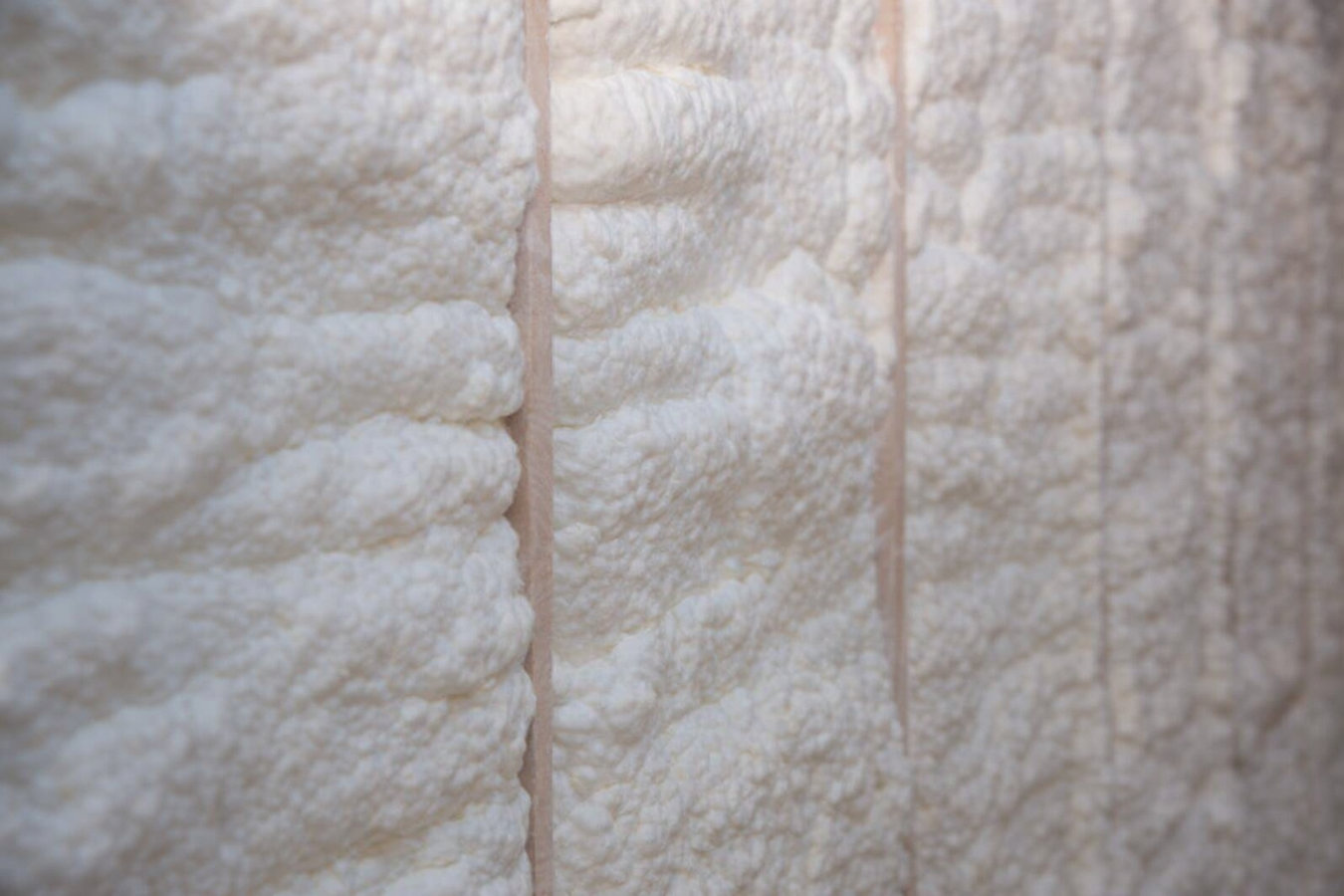
Open-cell foam fills every gap and crack so warm, humid outdoor air stays outside and your cooling system finally gets to do its job.
Open cell spray foam in Mililani, HI is sprayed on as a liquid and expands within seconds to fill every gap, crack, and irregular corner - creating a continuous sealed layer that slows heat transfer and blocks outdoor air from sneaking in. Most residential jobs on a single-story Mililani home take one to two days. Unlike fiberglass batts that leave voids around pipes and wiring, open-cell foam bonds directly to surfaces and stays there for the life of the building.
In a place like Mililani, where outdoor humidity is high year-round, the air-sealing quality of the foam is often just as valuable as the insulation itself. When humid outdoor air cannot get in, your air conditioner runs less and your home feels more comfortable from room to room. Pairing open-cell foam with commercial insulation or full-building spray foam insulation services gives complete coverage across every space in your property.
If your air conditioning runs almost all day but certain rooms - especially bedrooms under the roof - never quite cool down, heat is getting in faster than your system can remove it. In Mililani, where the sun beats down on roofs year-round, an under-insulated attic can make the top floor feel like an oven. Proper foam insulation slows that heat transfer so your system can actually keep up.
Hawaii electricity rates are already the highest in the country, so any increase is worth investigating. If your usage has not changed but your bill keeps climbing, poor insulation is one of the most common culprits. Your air conditioner is likely compensating for heat and humid air leaking into the home through gaps that foam would seal.
Hold your hand near the ceiling or the edge of your attic access panel. If you feel warmth radiating down, or if the area near the hatch feels noticeably hotter than the rest of the room, your attic is not insulated or sealed properly. In Mililani's climate, an uninsulated attic acts like a heat collector sitting directly above your living space.
When warm, humid outdoor air gets into a cooled space, it condenses on cooler surfaces - showing up as moisture on windows, a musty smell in closets, or visible dampness on interior walls. Mililani's humidity makes this more likely than in drier climates. Open-cell foam seals the gaps that let humid air in and can help reduce moisture problems throughout the home.
We install open-cell foam in attics, interior walls, and crawl spaces throughout Mililani and central Oahu. Every job starts with a site assessment so we can measure the spaces accurately, check for any moisture or ventilation issues that need to be addressed first, and confirm that open-cell foam is the right fit for your specific home. For homes where a stronger moisture barrier is the priority - such as rooflines or below-grade spaces - we explain when spray foam insulation with closed-cell foam would serve better.
For older Mililani homes built in the 1970s and 1980s, we assess whether existing degraded insulation needs to come out before new foam goes in. We also handle commercial insulation projects for business owners who need the same coverage for retail, office, or light industrial spaces. Every project finishes with a walkthrough so you can see the completed work and ask questions before we leave.
Applied to attic floor joists or roof deck to stop heat from radiating into your living space - the highest-impact application in most Mililani homes.
Ideal for reducing heat transfer through exterior walls, especially in older homes where original insulation has degraded or was never installed.
Suitable for occupied homes where walls cannot be opened - injected through small access holes to fill cavities without major disruption.
Suited for homes with vented crawl spaces where air sealing alongside insulation helps manage humidity entering from below.
Mililani sits at roughly 1,000 feet on central Oahu, which means warm, humid conditions year-round with very little seasonal change. Most homes in the community were built between the 1970s and 1990s to standards that required little insulation in Hawaii's mild climate. Decades later, whatever insulation was originally installed may have degraded - and the gaps those homes were designed with are now letting in both heat and humidity. Homeowners throughout Mililani Mauka face the same challenge, with the higher elevation bringing even more rainfall and moisture pressure.
Hawaii also has some of the highest electricity rates in the country, which means any reduction in how hard your cooling system works translates directly into real monthly savings. Open-cell foam installed correctly for Hawaii's climate - accounting for vapor permeability and ventilation - helps your AC keep up without running constantly. Homeowners in Wahiawa and other central Oahu communities share the same construction-era housing stock and benefit from the same solutions. For guidance on safe foam installation practices, the U.S. Environmental Protection Agency provides homeowner guidance on spray polyurethane foam.
We respond within 1 business day. You share basic details about your home and the areas you want insulated. No commitment required at this stage.
A technician visits your home, walks through the attic or walls to be insulated, and checks for any moisture or ventilation issues that need attention first. The visit typically takes 30 to 60 minutes and comes with a written quote.
You receive an itemized written quote before any work starts. We let you know upfront whether a permit is required through the City and County of Honolulu and handle the application on your behalf if one is needed.
The crew applies foam, trims any excess, and protects surfaces that should not be sprayed. Plan to stay out of the home for at least 24 hours while the foam cures. We give you a clear all-clear time and walk you through the finished work before we leave.
Free estimate, no pressure. We reply within 1 business day.
(808) 556-0445We give you an itemized written estimate before you commit to anything - not a rough number over the phone. You know the full scope and price up front, so there are no surprises once the crew is on site. That clarity is how we earn your trust from the first visit.
Mililani's 1970s and 1980s homes were built with Hawaii's mild climate in mind - which often meant minimal insulation. We understand the construction details that are specific to this community and know where heat and humidity enter these homes. That local knowledge shapes every recommendation we make.
We do not quote over the phone. Every estimate follows an in-person site assessment. You get a written, itemized number before any crew arrives - no surprise additions at the end of the job. That is how we protect your budget and our reputation.
When a permit is needed through the City and County of Honolulu, we handle the application from start to finish. That protects you at resale - unpermitted insulation work can become a costly problem when it surfaces later.
Every one of these points ties back to a single promise: you will know exactly what was done, at what cost, and to what standard - before, during, and after the job. That matters everywhere, but it matters especially in Hawaii, where electricity is expensive and the wrong insulation decision is a costly one to undo.
Insulation for retail, office, and light commercial spaces in Mililani - managing Hawaii's heat and humidity in a business setting.
Learn MoreFull spray foam coverage using open-cell or closed-cell foam selected to match your home's specific needs and construction.
Learn MoreOahu has fewer insulation crews than the mainland - book your assessment now so you are not waiting weeks in the heat.