
Loading...
Serving Mililani, HI and surrounding areas. (808) 556-0445
Hawaii electricity rates are among the highest in the country. Proper commercial insulation reduces how hard your cooling system works and makes your building more comfortable for everyone inside.
Commercial insulation in Mililani, HI slows the movement of heat through your building's walls, roof, and floors - reducing how hard your cooling system has to work and making the indoor environment more comfortable and consistent. Most straightforward commercial jobs on a small office or retail space are completed in one to three days, with larger buildings or removal-and-replacement projects taking longer. The result is a building that stays cooler, feels less stuffy, and costs less to operate month over month.
Many commercial buildings in Mililani were constructed during the community's major growth period in the 1980s and 1990s, and their insulation - if any was installed at that time - may have degraded or been disturbed by subsequent renovations. If your building is in that age range and has not been inspected recently, it is worth having a contractor take a look before your next lease renewal or renovation project. Pairing commercial insulation with crawl space vapor barrier work addresses both the thermal and moisture sides of Hawaii's climate challenge.
If your air conditioning seems to run all day without ever getting ahead of the heat, your building may be losing cool air faster than it can be replaced. In Mililani, where the sun hits rooftops at a steep angle and temperatures stay warm even at elevation, a poorly insulated roof or ceiling is often the first place heat sneaks in. Climbing energy bills with no obvious cause are a strong signal to investigate.
Walk through your building on a warm afternoon and notice whether some spaces feel significantly hotter than others. Uneven temperatures often point to gaps or thin spots in the insulation - places where heat gets through more easily. This is especially common in older commercial buildings in Mililani built before current energy standards.
Mililani's trade winds carry moisture. If your building feels heavy or damp even with the air conditioning on, warm moist outside air is getting in through gaps that insulation and air sealing could close. This is not just a comfort issue - persistent humidity can cause mold and long-term damage to building materials.
Many Mililani commercial buildings were constructed in the 1980s and 1990s. Insulation from that era may have degraded, shifted, or been disturbed by renovations. If your building has had a roof leak, even one that was repaired, the insulation beneath it may have absorbed moisture and lost much of its effectiveness. A contractor assessment is a reasonable first step.
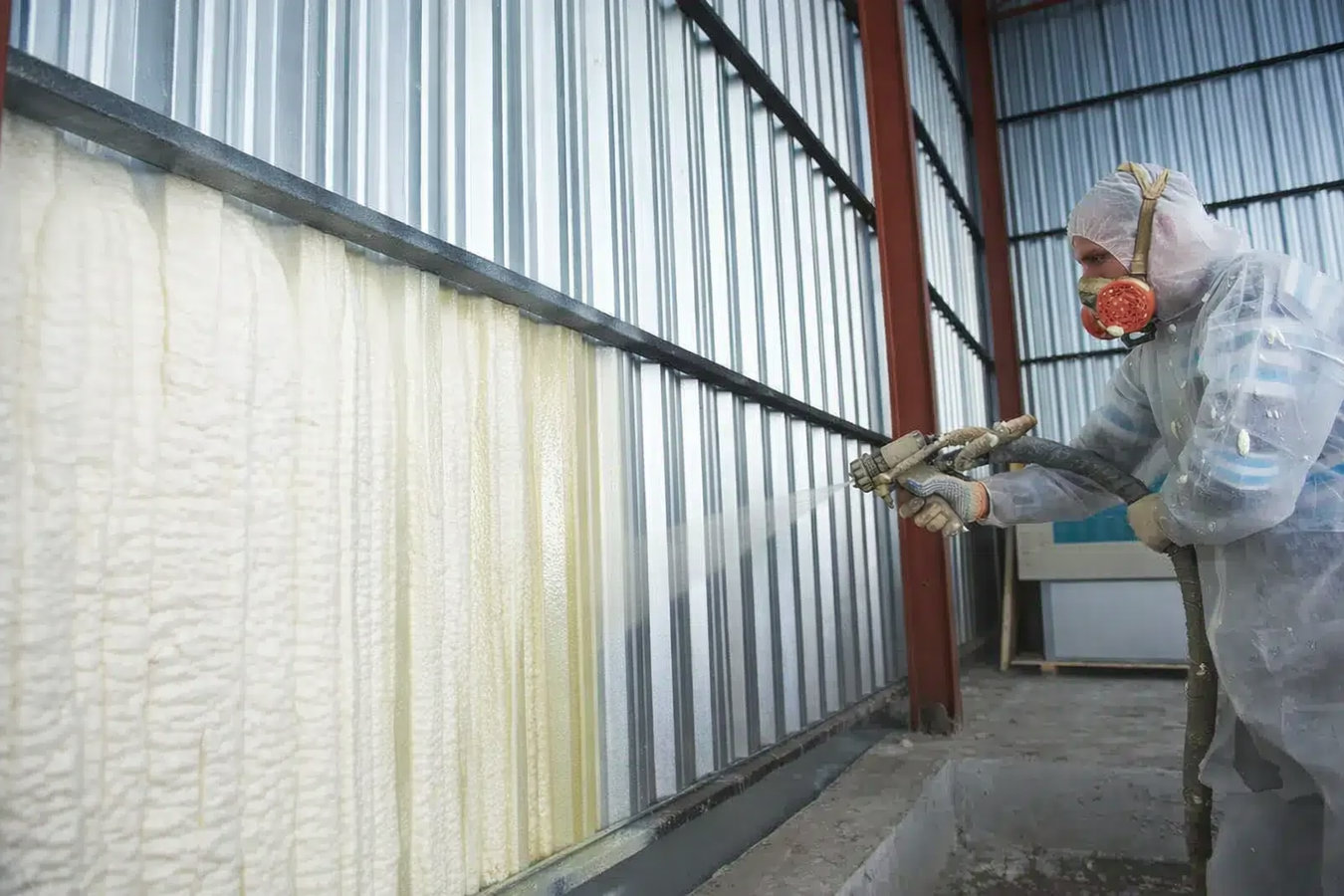
We install the full range of commercial insulation types - spray foam, rigid board, and blown-in materials - selecting the right approach based on your building's construction, the areas being insulated, and the performance goals you have. Spray foam is popular for commercial applications because it seals gaps while it insulates, which is especially valuable in Mililani's trade-wind climate where air can be pushed through gaps more aggressively than in calmer locations. We also work alongside spray foam insulation specialists on larger projects that combine multiple material types.
For buildings with existing insulation that has reached the end of its useful life, we handle removal and replacement - ensuring that degraded or moisture-damaged material does not stay in the walls or ceiling where it can cause further problems. Every commercial project begins with an on-site assessment and ends with a walkthrough of the completed work. When a permit is required through the City and County of Honolulu, we handle the application on your behalf so you are not chasing paperwork during a busy work period. For buildings with crawl space concerns, we can combine commercial insulation with crawl space vapor barrier installation for complete below-grade protection.
Best for buildings where air sealing alongside insulation is a priority - especially in Mililani's trade-wind climate.
Suited for roofs, exterior walls, and below-grade applications where a flat, consistent thermal layer is needed.
A cost-effective option for attic spaces and hard-to-reach cavities in office and retail buildings with large flat ceilings.
For buildings with degraded, wet, or pest-damaged insulation that needs to come out before new material goes in.
Mililani sits at about 1,000 feet on central Oahu's plateau, with warm, humid conditions year-round and steady trade winds that carry moisture. That combination means a commercial building here needs insulation that handles both heat gain from the sun and air-borne humidity - a balance that not every insulation type or installer manages well. Hawaii also has some of the highest commercial electricity rates in the country, which means the return on a well-executed insulation project is faster here than almost anywhere else. Businesses in Aiea and across central Oahu share the same climate conditions and see the same payback on energy-efficiency upgrades.
Commercial insulation projects in Honolulu County typically require a building permit, and permit processing on Oahu can take several weeks. A contractor who tells you permits are not needed for commercial insulation is worth questioning. Mililani is also a master-planned community managed by the Mililani Town Association, and commercial properties in or near the community may be subject to design guidelines for exterior modifications - something a contractor familiar with local requirements will flag during the estimate visit. Businesses in Waipahu and other Oahu communities without HOA restrictions have a simpler path, but the performance expectations are the same. The North American Insulation Manufacturers Association sets the installation standards we follow on every commercial project, and the Hawaii State Energy Office offers guidance on commercial efficiency programs that may offset your upfront cost.
We respond within 1 business day. You share basic details about your building - size, type of space, and what is prompting the call. No commitment required at this stage.
A technician visits your building, checks the current insulation, identifies gaps or problem areas, and explains what type of material makes sense for your situation. You receive a written, itemized estimate - not a single number - before any decision is made.
For most commercial jobs in Honolulu County a building permit is required before work can begin. We handle the permit application on your behalf. Permit processing can take several weeks, so factoring this into your schedule from the start avoids surprises.
On installation day the crew protects areas not being worked on and proceeds section by section. If spray foam is involved, treated areas will need to be clear while the material cures - your contractor will give you a specific timeframe. The work then passes a building inspection before the permit is officially closed out.
We handle permits, provide a written quote, and reply within 1 business day. No obligation.
(808) 556-0445We take care of the permit application with the City and County of Honolulu so you never have to wonder whether your project is on record. That protects you if you ever sell, lease, or refinance the building - unpermitted commercial work can become a costly problem when it surfaces during a transaction.
Mililani's combination of heat and trade-wind humidity requires materials and installation methods that account for both. We select insulation types that perform in Hawaii's specific climate - not the mainland standard approach applied here by default. That distinction matters for how long your investment holds up.
NAIMA installation guidelinesWe put the full scope and a written estimate in front of you before any work is scheduled. You know exactly what is being installed, where, and at what price before you commit. Clear paperwork up front is something a verbal quote alone does not provide.
Mililani is a master-planned community, and commercial properties here may be subject to Mililani Town Association design guidelines for any work that touches exterior walls or rooflines. We flag those requirements during the estimate visit so your project does not hit an avoidable delay.
Commercial insulation in Hawaii is not a simple copy of mainland work - the climate, the permit process, and the cost of energy all create a different set of priorities. We understand those priorities and build them into every project we take on in Mililani.
Moisture barrier installation for crawl spaces beneath commercial buildings - protecting against Hawaii's year-round humidity from below.
Learn MoreOpen-cell or closed-cell spray foam for commercial properties that need both insulation and air sealing in a single installation.
Learn MorePermit processing on Oahu takes time - the sooner you start, the sooner your building is comfortable and your energy bills come down.