
Loading...
Serving Mililani, HI and surrounding areas. (808) 556-0445
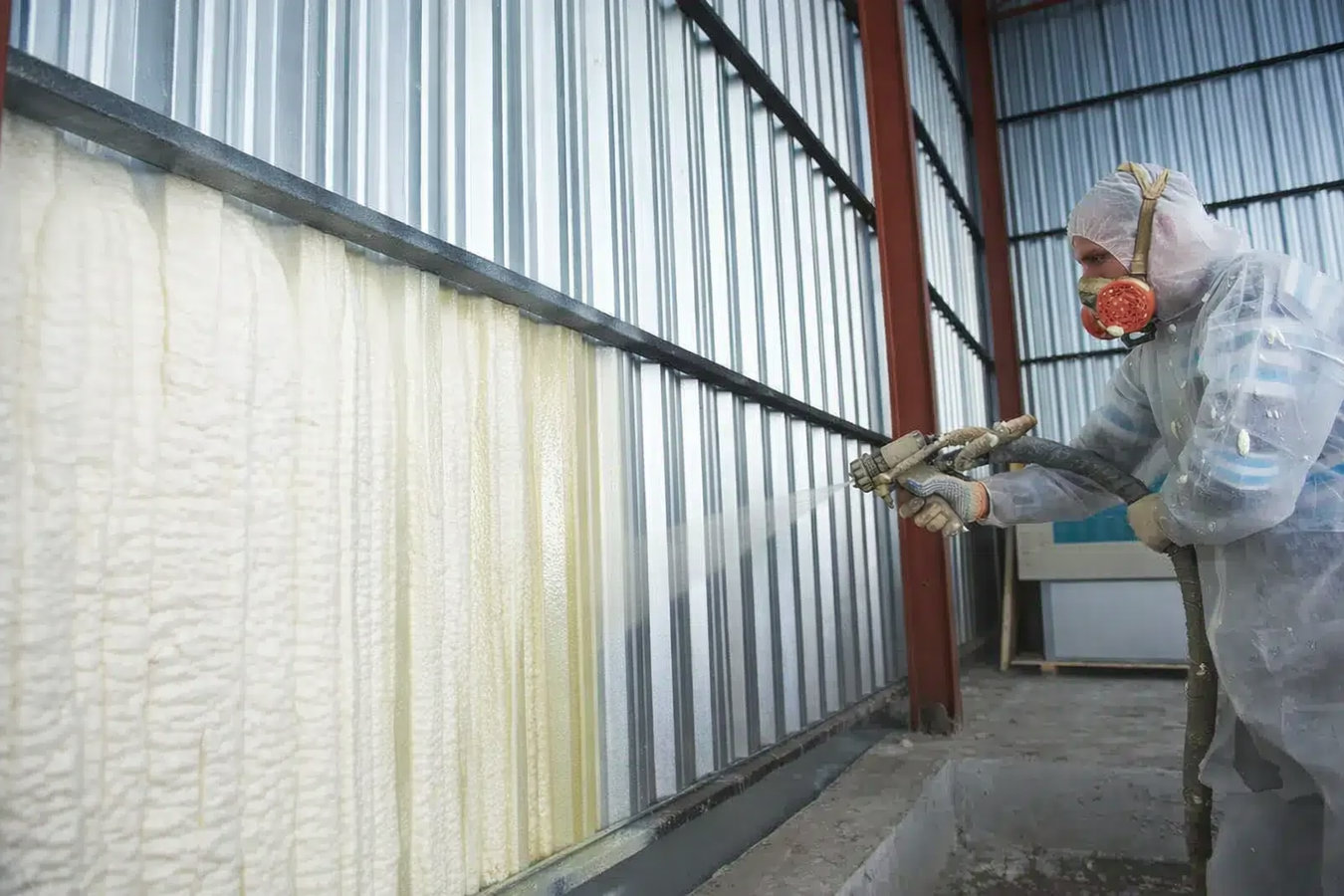
Supreme Mililani Insulation serves Aiea with commercial insulation, spray foam, attic insulation, and crawl space moisture control - call for a free estimate with a 1-business-day response.
Aiea has a mix of strip retail, small offices, and light industrial buildings along Kamehameha Highway that need the same insulation discipline as residential properties. Our commercial insulation work covers warehouses, retail shells, and office suites - properly insulated commercial buildings in Hawaii's heat reduce cooling loads and keep workers and customers comfortable year-round.
Most Aiea homes were built between the 1950s and 1980s with minimal attic insulation, and after 40 to 70 years of Hawaii's heat and humidity, what was there is often compressed, moisture-damaged, or simply inadequate by current standards. The attic is where the biggest gains come from in a one-story postwar Aiea home.
Concrete block construction is common in older Aiea homes, and spray foam applied to interior rim joists and framing seals the gaps that CMU walls alone do not address. On hillside lots where wind exposure is higher, spray foam in wall cavities and roof lines provides a tighter seal than batts or blown-in.
Aiea's hillside terrain creates elevated crawl spaces on many properties, and those open underfloor areas allow moisture to rise from the ground into the floor system. Insulating and sealing the crawl space stops that moisture transfer and improves floor temperatures in rooms directly above.
Ground moisture on Aiea's sloped lots is a constant issue, especially after the heavy rains of winter. A properly installed vapor barrier under the home stops that moisture before it reaches floor joists and interior spaces. On concrete slab homes, vapor barrier work at the perimeter and foundation vents addresses the same problem differently.
For Aiea homeowners who want to improve attic coverage without major disruption, blown-in insulation can be added over existing material in a single day. It fills the irregular spaces common in older Hawaiian roof structures and brings coverage up to current R-value targets with minimal mess and no demolition.
Aiea grew quickly after World War II, largely to house workers and military families connected to the Pearl Harbor complex. The bulk of the housing stock dates from the 1950s through the 1980s, and those decades of construction predate the energy codes and insulation standards that came later. A home built in 1965 in Aiea may have been constructed with a token layer of fiberglass batts - or nothing at all in the attic. Four to seven decades of Hawaii heat, humidity, and salt air have done their work on whatever was installed. Most of those original insulation materials are either compressed to the point of providing little thermal value or moisture-damaged to the point of being a health concern.
The hillside terrain that defines Aiea creates an additional layer of complexity. Homes on sloped lots often have elevated foundations or partial crawl spaces where ground moisture rises and accumulates under the floor. Aiea also sits on the edge of Pearl Harbor's salt air influence, which corrodes the metal flashing and penetration covers that keep moisture out of attic assemblies. A contractor who understands Hawaii construction - CMU block, wood frame, flat and low-pitch rooflines, minimal eaves - will approach an Aiea job differently than someone applying mainland techniques without that context.
Our crew works throughout Aiea regularly, and we understand the local conditions that affect insulation work here. Aiea is an unincorporated community in Honolulu County, so permit applications go through the City and County of Honolulu Department of Planning and Permitting. We handle that process when the scope of work requires it, so the homeowner does not have to navigate the DPP independently.
The properties we see most often in Aiea are single-family homes on hillside lots, many with concrete block perimeter walls and retaining structures in the yard. We encounter both CMU block construction and wood-frame homes regularly. The streets climbing up from Kamehameha Highway toward Keaiwa Heiau State Recreation Area sit higher on the hillside where wind exposure is more pronounced and moisture infiltration around attic vents and eaves is a consistent issue. Properties closer to the commercial corridor near Pearlridge Center tend to be flatter and older, with more soil-contact crawl space issues than wind-driven infiltration.
We also serve the communities immediately surrounding Aiea. To the southeast, Halawa shares Aiea's postwar housing character and hillside terrain. To the west, Pearl City is another area where we regularly work on homes with similar construction profiles. Call us and we can schedule a free assessment within a day or two of your request.
We respond within 1 business day. You describe your home, its age, and the main problem you want solved. No commitment is required at this stage.
A technician visits your Aiea home, inspects the attic, crawl space, or wall areas, and explains what the current insulation is doing and where it is failing. The visit takes 30 to 60 minutes and we give you a plain-language summary before we leave - including any moisture or pest findings you should know about.
You receive an itemized written quote before any work starts. If a permit through the Honolulu DPP is required, those costs are included. We answer pricing questions directly and do not redirect you to a follow-up call.
The crew completes the work, hauls away all job waste, and walks you through the finished installation. Blown-in jobs have no re-entry restriction. Spray foam jobs require a 24-hour cure window, which we confirm before the crew leaves your property.
We serve all of Aiea, from the hillside neighborhoods near Keaiwa Heiau to the flatlands along Kamehameha Highway. Free estimates, written quotes, and 1-business-day responses.
(808) 556-0445Aiea is a census-designated place on the central coast of Oahu, tucked between Pearl Harbor to the south and the Ko'olau foothills to the north. It has a population of roughly 9,000 to 10,000 residents and is almost entirely residential outside of the commercial strip along Kamehameha Highway. Pearlridge Center, one of Hawaii's largest shopping malls, anchors the area's retail and serves as the main commercial hub for residents and neighboring communities. Most of Aiea climbs the hillside above Pearl Harbor, with streets winding up through neighborhoods to Aiea Heights, where the Keaiwa Heiau State Recreation Area provides a forested green space at the top of the neighborhood.
The housing stock is predominantly single-family detached homes, with some townhomes and condominiums near the commercial corridor. Most homes were built between the 1950s and 1980s to serve military and civilian families connected to Pearl Harbor and the surrounding employment base. High owner-occupancy rates reflect a community where families have stayed for decades and maintained their properties over the long term. Adjacent communities include Pearl City to the west, which shares much of Aiea's postwar residential character, and Waimalu to the east along the Pearl Harbor shoreline.
Creates an airtight seal that improves energy efficiency throughout your home.
Learn MoreSafe removal of old or damaged insulation to prepare for fresh installation.
Learn MoreProtects your foundation and floors from moisture and temperature swings.
Learn MoreHigh-density foam delivering superior insulation and moisture resistance.
Learn MoreControls moisture movement to protect your structure and indoor air quality.
Learn MoreUpgrades existing homes with modern insulation without major renovations.
Learn MoreCall us today for a free estimate. We serve all of Aiea and respond within 1 business day - do not let another Hawaii summer pass with an under-insulated home.