
Loading...
Serving Mililani, HI and surrounding areas. (808) 556-0445
Damp air rising through your floor keeps your home uncomfortable and your AC running overtime. Proper crawl space insulation blocks moisture at the source.
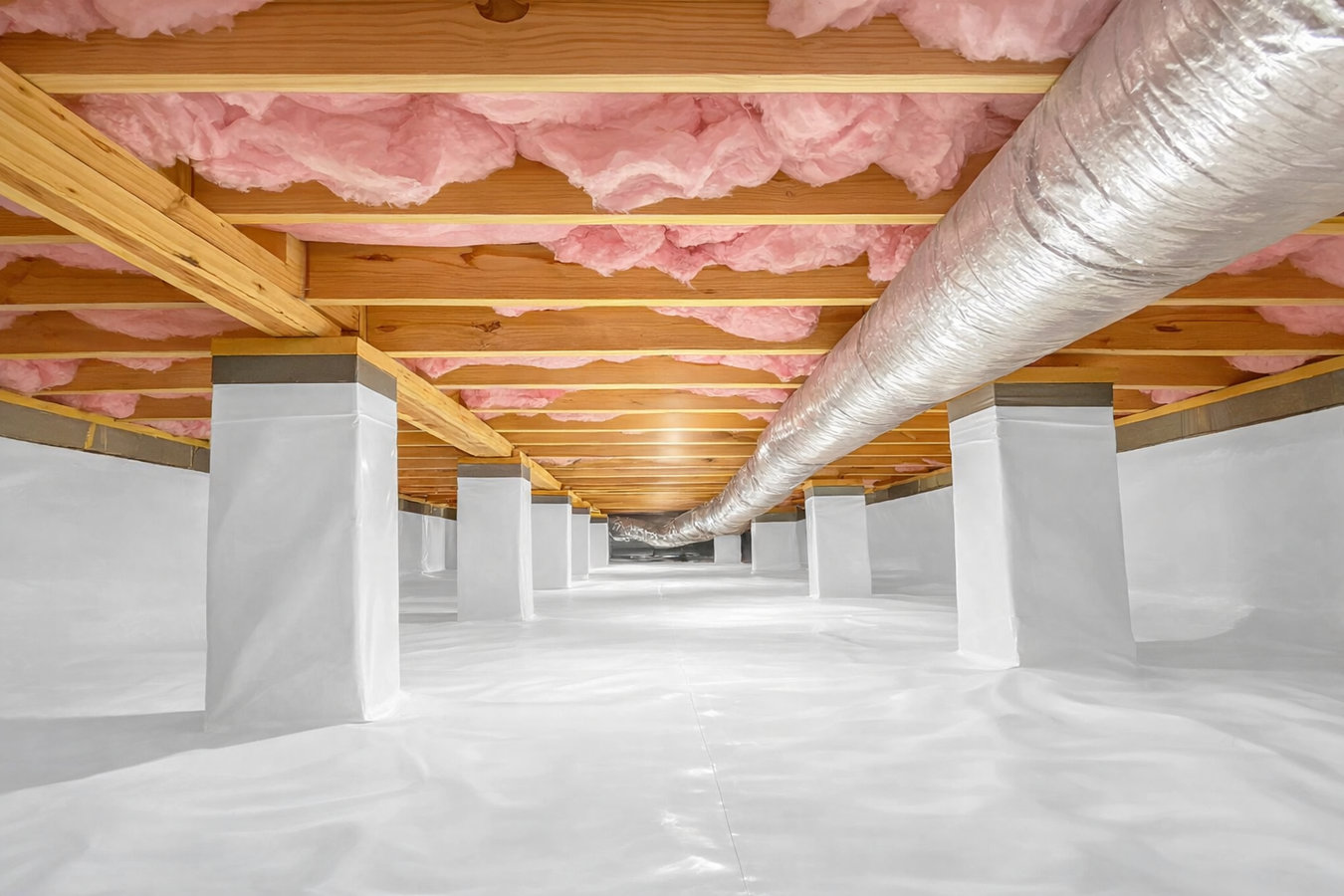
Crawl space insulation in Mililani slows the movement of heat and moisture between the ground and your living areas, with most jobs completing in one to two days and requiring no displacement from your home while the crew works in the space below your floor.
In Mililani's year-round humid climate, the crawl space is one of the most overlooked sources of comfort and energy problems. Moisture rises through the soil, works its way into uninsulated or failing insulation, and gradually affects floors, air quality, and how hard your cooling system has to work. Many homes in the area were built between the 1970s and 1990s - a generation of construction that did not account for the long-term moisture performance we now understand to be critical in Hawaii.
Depending on the condition of your space, the right solution may pair insulation with a ground moisture barrier, or it may require removing old material first - a step covered under our insulation removal service. For homes dealing with moisture at the wall level as well, our wall insulation work addresses the complete picture.
If your floors feel clammy or noticeably cooler than the rest of the room - especially in the morning or after rainy weather - moisture from the crawl space is likely working its way up. In Mililani's humid climate, this is one of the most common early signals homeowners notice before they ever look under the house.
A persistent musty smell that seems stronger near the floor or in rooms above the crawl space often means moisture and possibly mold are building up underneath your home. Mililani's year-round humidity creates ideal conditions for this kind of buildup. Catching it early, before it spreads to the wood structure, is far less expensive than addressing it later.
If your home takes longer to cool down or energy bills have crept up without a clear reason, poor crawl space insulation could be part of the cause. Heat and moisture from below the floor make your system work harder. This is especially noticeable in Mililani homes built in the 1980s, where original insulation may have thinned or absorbed moisture over the decades.
If you peek into your crawl space and see insulation drooping, falling off the floor joists, or sitting on the ground, it is no longer doing its job. Insulation that has lost contact with the surface it is supposed to cover provides almost no benefit and can trap moisture against wood. This is a check you can do yourself with a flashlight through the access hatch.
We install insulation between the floor joists above the crawl space for open systems, and we handle full sealed crawl space conversions where the vents are closed off and the walls and floor of the space itself are wrapped in insulation and a moisture barrier. The sealed approach tends to perform better in humid climates because it keeps outside air and moisture from cycling through the space continuously. For homes where the existing insulation has deteriorated, we coordinate with our insulation removal work to clear the space properly before new material goes in.
A ground moisture barrier is part of every crawl space job we do in Mililani - the soil conditions and year-round humidity make it the most important component of the whole system, not an optional extra. We also look for termite activity, damaged wood, and air leaks during the assessment, and we flag anything that should be addressed before insulation is installed. For homes where moisture or air movement is also an issue at the wall level, we can pair this work with our wall insulation service or recommend our crawl space vapor barrier installation for a dedicated moisture management solution.
Best for homes where the crawl space has existing vents and the primary goal is reducing heat and moisture transfer through the floor.
Suited for homes with persistent moisture problems - closing off vents and wrapping the entire space eliminates the source of the problem rather than managing it.
For any crawl space in Mililani where a ground barrier is missing or has deteriorated - often the most impactful single improvement available.
For homes where old, wet, or pest-damaged material needs to come out first before new crawl space insulation can perform correctly.
Mililani sits at roughly 1,000 feet elevation on central Oahu, where trade winds bring persistent moisture and relative humidity regularly runs above 60 to 70 percent year-round. For homeowners with a crawl space, that moisture does not stay outside - it moves up through the soil constantly. The homes built here between the 1970s and 1990s were designed to the construction standards of that era, and many did not include a properly sealed moisture system below the floor. If your home is from that period and has never had the crawl space addressed, there is a reasonable chance the original insulation has degraded beyond the point of being effective.
Oahu also has one of the highest concentrations of subterranean termites in the United States. They travel through soil and enter crawl spaces, damaging wood framing and insulation material. The University of Hawaii CTAHR identifies subterranean termites as a critical concern for Oahu homeowners, and we look for signs of activity before any installation work begins. Homeowners in Ewa Beach and Kapolei face similar conditions along the southwest coast, and we serve both communities with the same approach we use throughout central Oahu.
We respond within 1 business day. The first call is short - we ask about your home's size, age, and whether you have noticed any specific problems. Most Mililani contractors schedule an in-person visit before quoting, because crawl space conditions vary too much for a phone estimate to be reliable.
We physically go into the crawl space to assess existing insulation, moisture levels, any pest activity, and the state of the wood structure. This visit typically takes 30 to 60 minutes. We walk you through what we found and explain your options in plain terms before leaving. You receive a written estimate that breaks down all work and costs.
If your project requires a permit from the City and County of Honolulu - particularly for sealed crawl space conversions or structural changes - we flag that at this stage and handle the paperwork. Permit processing can add a week or two, so it is better to know early. We confirm the full timeline in writing before work begins.
The crew works entirely in the crawl space. Depending on scope, they may remove old insulation, address moisture issues, and lay a ground barrier before installing new insulation. Most jobs complete in one day; larger or more complex projects may run two. When finished, we show you photos of the completed installation and explain what to watch for in the coming weeks.
We respond within 1 business day - no obligation, no pressure. After you submit, someone from our office calls to schedule a free on-site visit where we inspect the space, explain exactly what we find, and give you a written estimate before any work begins.
(808) 556-0445You get a written estimate before we start and written documentation when we finish. That paper trail gives you peace of mind now and gives any future buyer of your home a clear record of the work that was done.
In Mililani, a ground moisture barrier is not an optional add-on - it is what makes crawl space insulation hold up over time. We include it in every crawl space job and explain exactly why it matters for central Oahu's humidity conditions before any work begins.
Oahu has one of the highest concentrations of subterranean termites in the United States, and the{" "} University of Hawaii identifies crawl spaces as a common entry point. We look for signs of pest activity during our assessment and recommend addressing any active infestation before insulation goes in - not over it.
We check whether your specific project requires a City and County of Honolulu permit and handle the paperwork if it does. You will not discover a compliance issue when you go to sell your home or when a later inspector takes a look.
Crawl space work in Hawaii involves moisture, pests, permit requirements, and materials that need to hold up in a climate nothing like the mainland. We bring specific knowledge of Mililani's conditions to every job - not a mainland playbook applied here. The ENERGY STAR program provides guidance on crawl space sealing and the materials that qualify as energy-efficient - we use products that meet those standards.
Moisture and heat do not only enter through the floor - wall insulation seals the gaps that let outside conditions in through the sides of your home.
Learn MoreA dedicated crawl space vapor barrier addresses ground moisture directly, giving your insulation the stable base it needs to perform long-term in Hawaii's climate.
Learn MoreContact Supreme Mililani Insulation today for a free on-site crawl space estimate. The sooner the space is sealed, the sooner your home stops fighting the moisture coming from below.